Fireplace Panel Cracks: What’s Safe, What’s Not, and When to Replace Them
When you look inside your fireplace and notice cracks in the panels, it’s natural to wonder: are they normal, or are they dangerous?
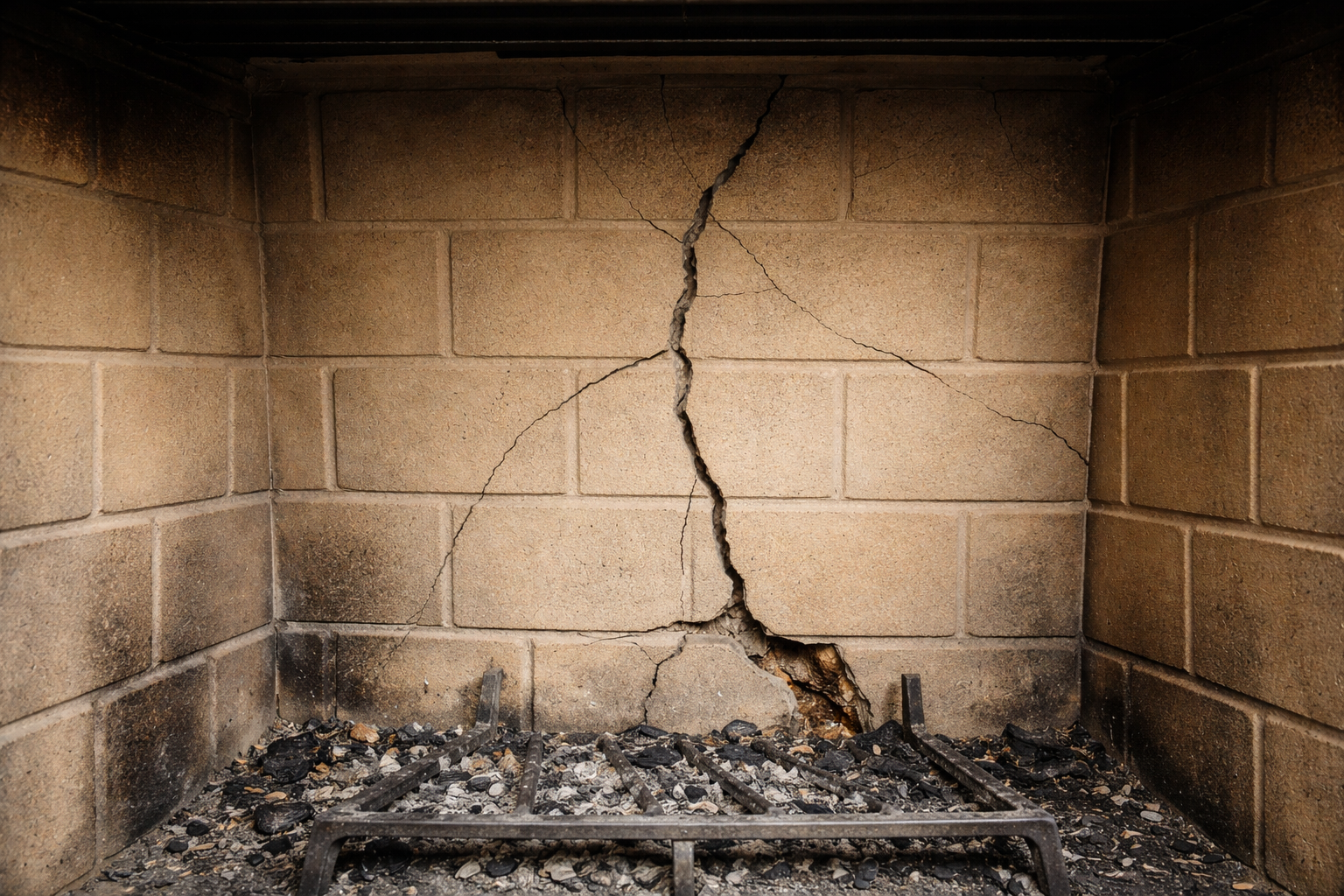
In prefabricated (factory-built) fireplaces, the brick-like interior panels are called refractory panels. These panels are essential for protecting the metal structure of the fireplace from extreme heat. While some cracking can be normal, certain types of damage can pose serious safety risks. Understanding the difference is key to safely using your fireplace.
Why Do Fireplace Panels Crack?
Refractory panels are exposed to extreme temperature changes every time you burn a fire. Temperatures inside the firebox can exceed 1,000°F, followed by rapid cooling once the fire goes out.
Over time, this constant expansion and contraction leads to cracking. Other common causes include:
• Burning excessively large or hot fires
• Water or moisture intrusion
• Age and general wear
• Improper fireplace use
Because of these conditions, minor cracking is fairly common in prefabricated fireplaces.
When Are Cracks Considered Normal?
Small hairline cracks are typically not a cause for concern. In most cases, cracks smaller than 1/8 inch that do not go all the way through the panel can be safely monitored rather than immediately replaced.
These minor cracks are usually caused by normal expansion and contraction of the material. However, it’s still important to keep an eye on them to ensure they don’t worsen over time.
When Should Fireplace Panels Be Replaced?
Certain types of damage indicate it’s time to replace your panels before using the fireplace again. Warning signs include:
• Cracks larger than 1/8 inch
• Cracks that go through the entire panel
• Pieces breaking off or missing
• Soft, crumbly, or deteriorating panels
• Exposed metal behind the panels
If you notice any of these issues, the fireplace may no longer safely contain heat. Continuing to use it could lead to overheating, warping, or even a fire hazard.
Why Refractory Panels Are So Important
Prefabricated fireplaces rely on refractory panels as a critical safety barrier. These panels help:
• Reflect heat back into the firebox
• Protect the metal structure from direct flame exposure
• Maintain safe operating temperatures
• Reduce heat transfer to surrounding materials
If the panels fail, the fireplace may no longer operate within safe limits.
Do Cracked Panels Mean You Need a New Fireplace?
In most cases, no. Many homeowners assume cracked panels mean the entire fireplace needs to be replaced, but that’s usually not true.
Replacement options are often available, including:
• Manufacturer (OEM) refractory panels
• Fireplace-specific panel kits
• Universal panels for discontinued models
• Custom-cut refractory panels
Replacing damaged panels can often restore your fireplace to safe working condition without replacing the entire unit.
The Importance of Professional Inspection
Even if cracks appear minor, it’s not always easy to determine whether they are safe. A professional technician can evaluate:
• Crack size and depth
• Overall panel condition
• Manufacturer guidelines
• Fireplace safety
Using the correct materials and panel thickness is essential to maintaining proper fireplace performance and safety.
Don’t Ignore Cracked Fireplace Panels
Cracked refractory panels are one of the most commonly overlooked fireplace issues. Addressing the problem early can help prevent more serious damage and costly repairs.
If you notice cracks or deterioration inside your fireplace, it’s best to have it inspected before continuing to burn fires. Proper maintenance and timely replacement can help extend the life of your fireplace and keep your home safe.